The Kupittaan kärki partnership project will transform the Turku Science Park into a more diverse and stronger entity over the coming years. The Science Park area is emerging as the city's second centre and an important transport hub.
Turku Science Park is developing and changing in giant leaps, spurred by the Kupittaan kärki partnership project that began this year. With this major project being implemented using an alliance model, the Science Park and Itäharju areas will be joined into a new district. In terms of scale, the project is significant on a national level in Finland.
Last December, Turku selected the YIT-led alliance group called Terävin kärki as its alliance partner, consisting of YIT Suomi Oy, Lundén Architecture Oy and Arkkitehdit von Boehm – Renell Oy, with COBE A/S, AFRY Finland Oy and WSP Finland Oy as named subcontractors.
“This is a very multi-faceted and interesting project. It includes drafting a master plan for the entire planning area, a structure spanning Helsinginkatu and the railway, parking facilities for about 1,500 vehicles, and the Taito campus of the Turku Vocational Institute. The master plan under development will also serve as a reference plan for the new local detailed plan to be drawn up for the area. Plenty of other business premises and residential construction are also being planned for the area,” lists Petteri Laine, Project Development Manager at YIT.
YIT has strong knowledge of the area, having previously built, among other things, the Original Sokos Hotel Kupittaa, Turku University of Applied Sciences' EduCity, the Kupittaa ball sports hall, Veritas' new headquarters, and ParkCity in the Science Park area.
Laine explains that one of the project's goals is to shape the area into an attractive and comfortable entity, a gateway to Turku.
“Helsinginkatu is the city’s main artery, but currently, people often just drive past the Science Park area via it. The project aims to create a feeling in this part of the city that you have arrived in Turku and the city centre begins here.”
Many still refer to the Kupittaan kärki partnership project as the Science Park or Kupittaa deck project, as a central part of the area's development plans from the start has been to expand the Science Park from Kupittaa over the railway line to Itäharju.
The entire alliance group is currently considering what the deck structure over Helsinginkatu and the railway will ultimately look like. Although the project's image is most often associated with the deck, Laine says that maximizing its size is not an end in itself.
The most important thing is to find the best ways to flexibly connect the current Science Park and Itäharju areas, and to ensure functional solutions for the needs of both the Taito campus and traffic.
The Taito campus rising in the area will bring Turku Vocational Institute students together in the same facilities in the future. The campus is the heart of the entire new area, around which the plan is built. In the future, the campus will have about students.
“Having the Vocational Institute’s new campus in the Science Park brings more good synergy to the whole area,” Laine praises.
In addition, the Science Park will become an even more significant transport hub in the future, as it is the first station for the upcoming One-Hour Train when arriving from Helsinki. Once the tram project is implemented, the Science Park will also become an important hub for internal rail traffic in the city. The area also has several large parking garages, and the selection is supplemented by electric scooters, city bikes, and shared cars. The goal is for the Science Park to be a place where arriving is smooth and where it is easy to switch from one mode of transport to another.
The Kupittaan kärki partnership project is set to progress rapidly, and construction is intended to start at the turn of 2024–2025. Laine says one of the key goals is to enable the fast and economical implementation of the project.
“I suspect that other projects will start simultaneously with the alliance's implementation by the area's landowners, so construction will start from several directions at the same time and the area will quickly change into something new.”
“It is also worth remembering that the development of the area will not stop here, but the Science Park will continue to grow in the coming years and decades. With this project, we must guarantee the conditions for that.”
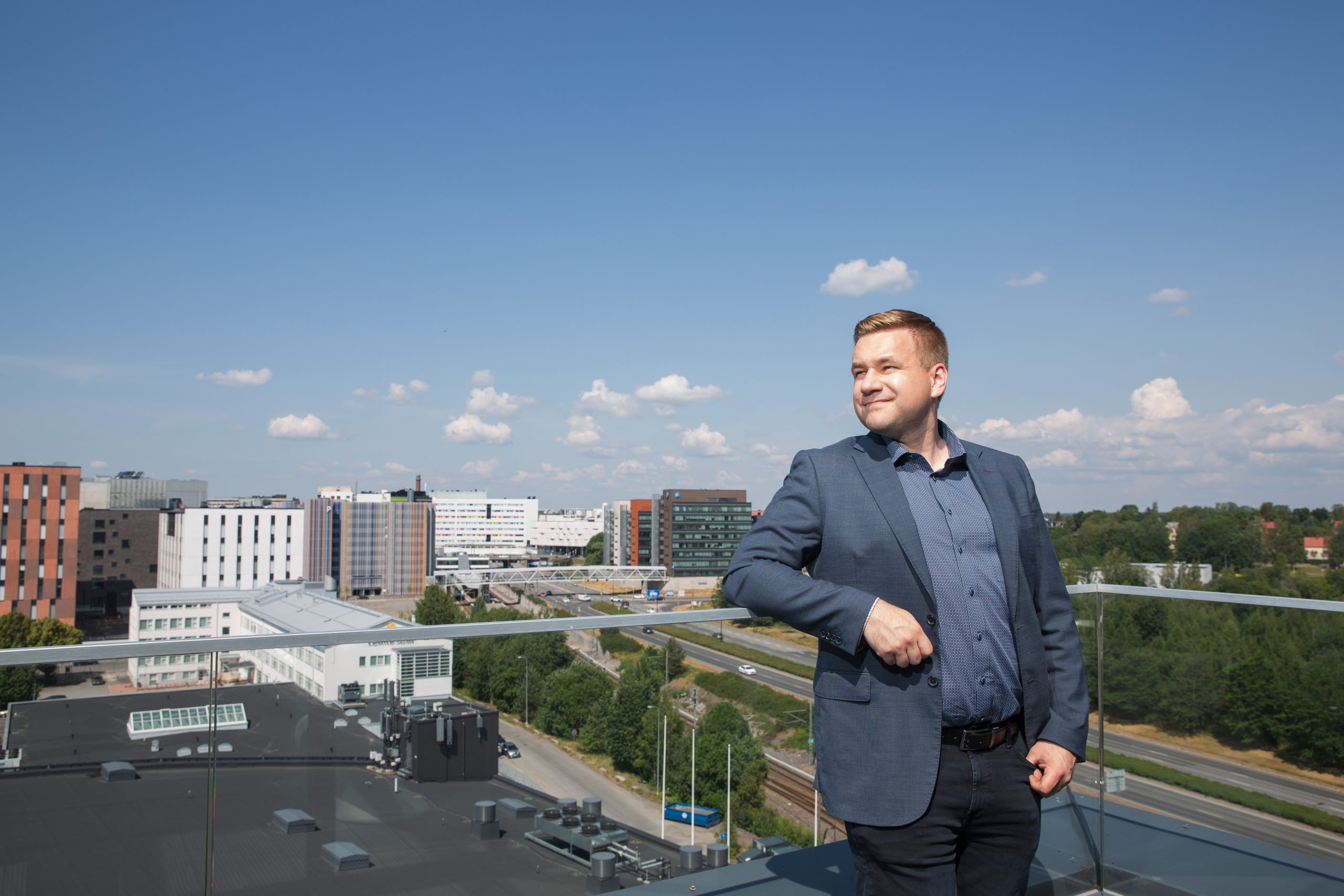
Currently, the alliance parties are working on the master plan and the preparation of project plans. The parties meet by working an average of two days a week in shared premises at TriviumCity. There is a direct view of the planned area from the office windows.
“Trivium is an excellent place for our workspaces, as we can constantly mirror the plans against the real view,” Laine says.
“Collaborating with different actors is familiar from previous projects, but the alliance model offers us an even more open operating environment where we can discuss everything related to the project together. As the client of the project, the City of Turku is heavily involved in the process and actively participates in daily work with the necessary expertise,” Laine explains.
“In an open discussion environment, it is easier to express one's viewpoint. Overall, the project is big and complex, and that is why the culture of openness is a really significant thing.”
YIT
Industry: YIT is the largest Finnish and a significant Northern European project developer and construction company
Founded: 1910
Employees: Approximately 5,000
Revenue: €2.4 billion (2022)